Modern Home Office Tips!

Arjun
| 27-08-2026
 · Lifestyle Team
A modern home office does not require a large room or a complete renovation.
A clear layout, practical furniture, suitable storage, and carefully selected décor can turn a limited area into a dedicated workspace that feels connected to the rest of the home.
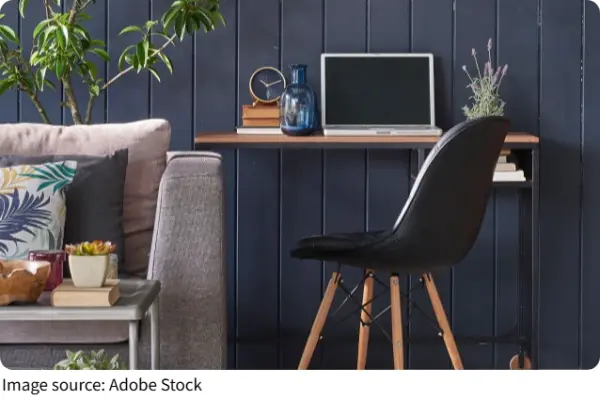
1. Choose Between Dark and Light
A dark office can use deeper hues, darker furniture, rugs, books, and artwork to establish a more subdued design. The walls do not need to be repainted if furniture and décor can provide the desired color scheme.
For a lighter office, use plenty of light fixtures, reflective metallic finishes, mirrors, and natural materials. This approach works particularly well in rooms with abundant natural light, but limited windows do not prevent the use of lighter décor.
2. Start With How the Space Will Be Used
Function should guide the layout before furniture and accessories are selected. Consider the work performed at the desk and whether different activities require separate areas. A desk should provide enough surface area for the equipment and materials used during the workday. Storage requirements also matter.
A small desk may be unsuitable if files, office supplies, or additional equipment need to remain nearby. For smaller rooms, measure the available area before buying furniture and leave enough space for the chair to move comfortably. A floating, corner, folding, or compact desk can work when a conventional desk would take up too much room.
3. Keep the Design Minimal
Modern office design can benefit from fewer decorative pieces. Select furniture and décor with useful functions, particularly when floor space is limited. Avoid filling the room with bulky items that restrict movement or make the workspace difficult to organize. A streamlined desk combined with carefully selected accessories can provide the required function without overcrowding the room.
4. Build Storage Into the Design
Storage helps keep documents, books, and office supplies organized. When space permits, a bookcase or cabinet can provide dedicated storage while contributing to the room's design.
Floating shelves, built-in storage, baskets, and furniture with integrated compartments are other options. Using vertical wall space can also reduce the amount of storage furniture required on the floor.
5. Use Lighting Carefully
Natural light can be useful when planning the position of a home office. A desk near a window can provide daylight, while a desk lamp supplies additional illumination when needed.
For a workspace without convenient natural light, choose a desk lamp designed to provide a natural-light effect rather than fluorescent lighting. A task lamp can also serve as a decorative feature when its design fits the rest of the room.
6. Add Greenery and Personal Items
Plants can introduce greenery into a home office, and different plant sizes and light requirements allow options for various spaces. Starting with a small plant can make it easier to determine what works in the available area.
Personal items can also make the office feel connected to the rest of the home. Family portraits, a favorite candle, a quote, or other meaningful objects can add character without requiring extensive decoration.
7. Keep Furniture Consistent With the Home
A home office generally works more naturally when its décor relates to the surrounding rooms. Modern furniture with clean lines, neutral colors, natural materials, and limited accessories can maintain a consistent design.
When selecting a desk, chair, shelves, lighting, and décor, consider how each item contributes to both appearance and daily use. For a small office, prioritize pieces that perform more than one function and avoid furniture that overwhelms the available space.
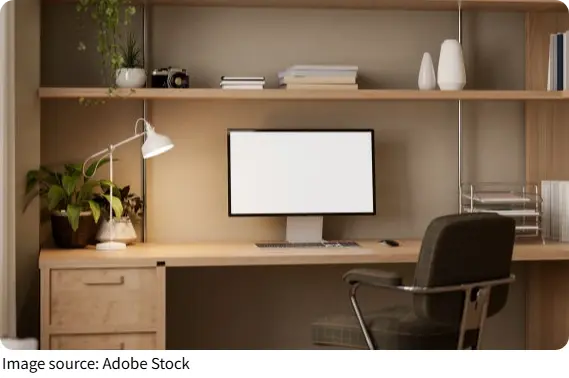
A practical starting point is to clear the workspace, measure the available area, and decide whether the room needs more storage, better lighting, or a more functional desk. From there, choose furniture and décor that solve those specific needs while maintaining a consistent modern style.