Ocean Mother Bond

Sofia Alvarez
| 07-08-2026
 · Animal Team
Welcome, Lykkers! Have you ever wondered how one of the ocean's largest animals gently cares for its tiny newborn? Despite their enormous size, humpback whales show remarkable patience and care toward their calves.
Today, let's explore how these magnificent marine mammals raise their young and discover why protecting them also helps protect the oceans we all share.
A New Life Begins
Humpback whales are marine mammals that give birth to live calves. A female usually welcomes one calf every two or three years, giving herself enough time to recover while raising her youngster. During pregnancy, the calf develops safely inside its mother, receiving warmth and nourishment until it is ready to enter the world.
Birth takes place underwater, making the calf's first moments especially important. Since whales breathe air, the newborn needs to reach the surface quickly. The mother gently guides or nudges her calf upward so it can take its first breath. This first successful breath marks the beginning of an incredible journey through the ocean.
The Precious First Weeks
The early weeks of life are filled with learning. Although a newborn humpback whale is already several meters long, it still depends entirely on its mother. The calf drinks rich milk that provides concentrated nutrition, allowing it to grow rapidly and build the energy needed for swimming.
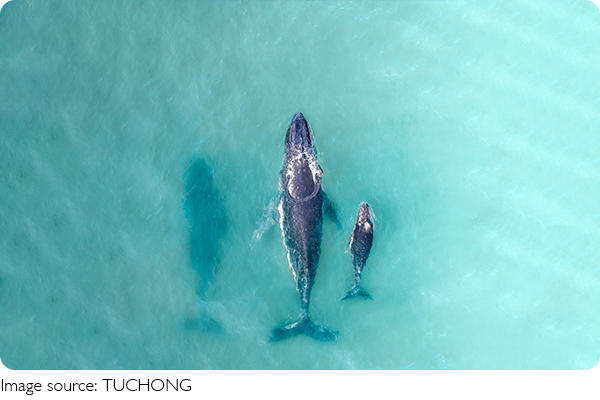
The mother carefully adjusts her speed so her calf can remain close without becoming tired. Instead of rushing through the water, she chooses a steady pace that matches the youngster's ability. This patient approach allows the calf to improve its swimming skills day by day while staying safe beside its mother.
Researchers have also observed that calves often swim very close to their mothers, taking advantage of the gentle water flow created by the larger body. This clever position helps conserve energy during long journeys.
A Strong Family Connection
The relationship between a humpback whale mother and her calf is one of the most touching examples of care in the natural world. During the first months, the mother stays close almost all the time, watching every movement and responding whenever her calf needs support.
If another large sea creature approaches too closely, the mother places herself between the visitor and her calf. Her enormous body provides a natural shield while the youngster remains safely nearby. This protective behavior gives the calf more opportunities to learn and grow with confidence.
Communication also strengthens their connection. Gentle sounds and body movements allow the pair to stay together, even when underwater visibility becomes limited. This constant interaction helps the calf recognize its mother and follow her through changing ocean conditions.
Learning To Explore
Every day brings new lessons for the growing calf. By following its mother, it gradually learns when to surface for air, how to swim more efficiently, and how to travel across vast stretches of ocean.
The mother teaches mainly through example. Rather than forcing the calf to perform certain actions, she demonstrates the movements needed for daily life. The youngster carefully copies these behaviors, becoming stronger and more confident with each passing week.
As time goes on, the calf becomes capable of longer dives and greater independence. However, the close bond with its mother remains an essential part of its early development.
Working Together For Their Future
Around the world, researchers, conservation organizations, and coastal communities have worked together for many years to improve conditions for humpback whales. Protected marine areas, responsible fishing practices, and ongoing scientific research have helped many whale populations recover.
Education also plays an important role. As we learn more about humpback whales and the challenges they face, we become better prepared to support healthy marine ecosystems. Every effort to keep the oceans clean and balanced benefits not only humpback whales but also countless other marine species.
Our Shared Responsibility
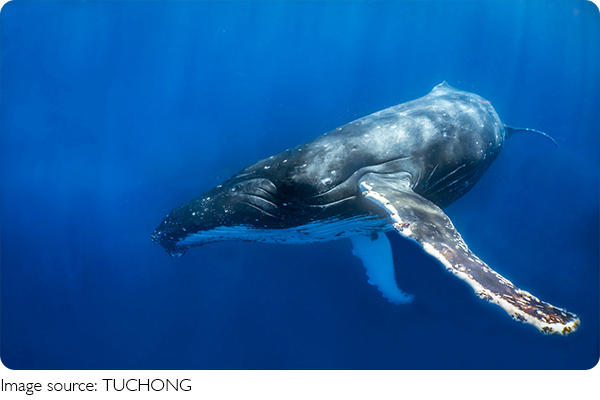
Dear Lykkers, the story of humpback whales reminds us that patience, care, and dedication can be found throughout nature. From the calf's very first breath to its growing independence, every stage reflects remarkable teamwork between mother and young.
We can contribute in simple ways by reducing unnecessary waste, supporting ocean conservation efforts, and sharing knowledge about marine life with others. Small actions, when combined, can create meaningful change.
Which part of the humpback whale's parenting journey impressed you the most? Share your thoughts, and let's continue discovering the amazing stories hidden beneath the waves together!
Mother Humpback Protects Calf From Males
Video by Nature on PBS