Nature’s Venom Shield

Arvind Singh
| 22-05-2026
 · Animal Team
Hi, Readers! Most people see opossums as unusual nighttime wanderers with pale faces, hairless tails, and a famous habit of collapsing dramatically when frightened. They are often misunderstood and rarely appreciated for the remarkable abilities they carry.
Hidden inside the blood of the Virginia opossum is an incredible natural defense that can neutralize dangerous snake venom. Scientists believe this surprising adaptation could inspire new treatments that may help protect both animals and humans from venomous bites.
A Discovery Hidden in Opossum Blood
For decades, researchers noticed something unusual about the Virginia opossum. Unlike many mammals, it could survive encounters with venomous snakes that would normally be fatal to other animals. Scientists suspected the animal carried some form of natural resistance, but the exact reason remained unclear.
Researchers later isolated a specific peptide in the opossum’s blood that appeared capable of neutralizing snake venom toxins. A peptide is a tiny chain of amino acids that can interact with harmful substances inside the body. Laboratory tests produced remarkable results. Mice exposed to venom from species such as the western diamondback rattlesnake and Russell’s viper survived when treated with the opossum-derived compound.
Even more surprising, some animals showed almost no visible signs of poisoning. That result immediately captured scientific attention because snake venom is incredibly complex. Most venoms contain a mixture of toxins designed to attack different parts of the body at once.
Some damage muscle tissue, others destroy blood cells, while certain toxins target the nervous system and shut down breathing. The idea that one naturally occurring compound could interfere with multiple venom effects seemed almost unbelievable.

Why Snakebite Remains a Global Emergency
Snakebite is not just a wilderness problem. In many developing regions, it is a major public health crisis. The World Health Organization estimates that tens of thousands of people die annually from venomous snakebites, especially in rural parts of Asia, Africa, and Latin America. Farmers, children, and laborers working far from hospitals are among the most vulnerable.
One of the biggest challenges is that traditional antivenom is highly specific. Doctors usually need a treatment designed for the exact snake species responsible for the bite. Producing those antivenoms is expensive and complicated because manufacturers often rely on venom extraction and animal-based antibody production. Many clinics in poorer regions simply cannot afford to stock enough varieties.
Even when antivenom exists, patients may arrive too late. Some victims live hours away from medical centers, and venom can spread rapidly through the body before treatment becomes available. That is why researchers are so interested in the opossum peptide. If scientists could develop a broad-spectrum antivenom inspired by this compound, it might simplify treatment and reduce costs dramatically.
The Science Is Exciting — But Complicated
Friends, despite the excitement, experts caution that the research is still in its early stages. Snake venom is not a single poison. It is a complex biochemical mixture containing dozens or even hundreds of toxins. The exact composition can vary depending on the species, age, habitat, and even the region where the snake lives.
For example, two Russell’s vipers living in different regions may produce venom with significantly different chemical properties. A treatment effective against one population may not fully protect against another. Venom researchers also point out that neutralizing one category of toxin does not automatically stop all damage. Some toxins attack blood clotting, while others destroy tissue or paralyze breathing muscles.
An effective universal treatment would need to handle multiple biological attacks at once. Still, the opossum peptide remains one of the most promising discoveries in venom research because it demonstrated unusually broad activity compared to many existing approaches.
Nature’s Survivors
The Virginia opossum’s venom resistance may have evolved through survival pressure over thousands of years. As opportunistic scavengers and hunters, opossums frequently encounter venomous snakes in the wild. Any animal capable of surviving bites would gain a major evolutionary advantage.
Interestingly, opossums are not the only mammals with this ability. Honey badgers, hedgehogs, and certain ground squirrels also show partial resistance to venom. Scientists believe studying these animals may reveal additional biological defenses that could inspire future medical treatments. Nature often solves problems long before humans fully understand them.
A Medical Breakthrough Could Save Thousands
One reason this research matters so much is because snakebite treatment has changed surprisingly little over the past century. Modern antivenom still relies on principles developed more than 100 years ago. Meanwhile, many rural hospitals continue struggling with shortages, high costs, and limited refrigeration needed to store treatments safely.
A simpler, synthetic peptide-based therapy could eventually become easier to transport, cheaper to manufacture, and faster to administer in remote areas. That possibility is what makes the opossum discovery so important. Scientists are still testing safety, effectiveness, and real-world applications, but the concept itself has already reshaped discussions about future antivenom development.
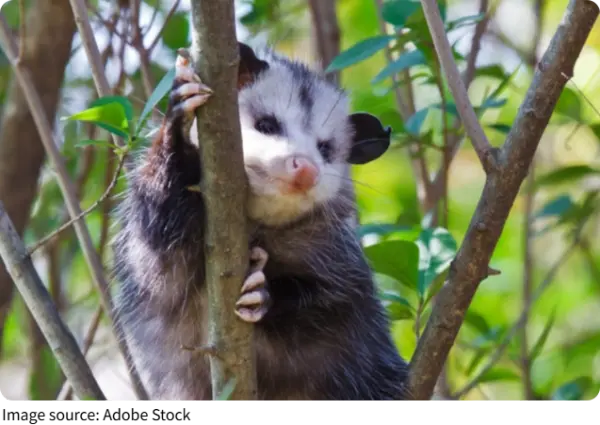
Readers, the Virginia opossum has spent years being mocked as awkward, dirty, or unattractive. Yet inside this often-overlooked animal may lie a biological defense powerful enough to inspire lifesaving medicine. It is a reminder that some of nature’s most valuable secrets come from creatures people rarely appreciate.