Stop Holding It Wrong

Santosh Jha
| 15-05-2026
 · Sport Team
Most people walk onto the badminton court, grab the racket like a frying pan, and wonder why their shots feel weak and awkward. It's not your arm strength. It's not your footwork.
It's the grip — the one thing that connects you to every shot you make, and the one thing most beginners completely skip learning properly.
A correct grip is as simple as a friendly handshake. Imagine the handle is a hand approaching yours. Go ahead and shake it. That's your forehand grip — your default, your foundation, and the starting point for everything else in the game.
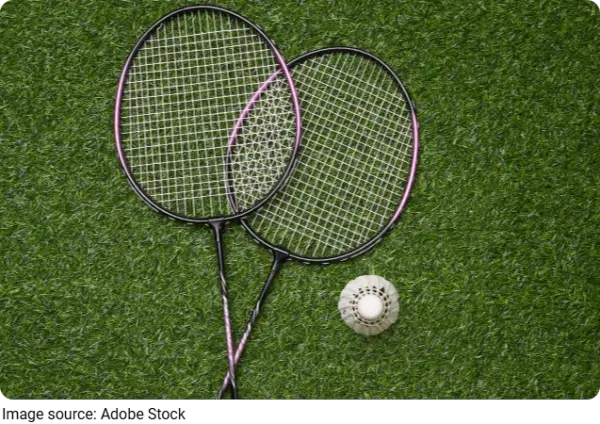
The Handshake That Changes Everything
With the forehand grip, your thumb rests comfortably against one of the wider flat surfaces of the handle, while your index finger sits slightly apart from the others, forming a natural V-shape between thumb and index. Your remaining fingers wrap around loosely. That word — loosely — matters more than anything. A tight grip kills wrist flexibility, and without wrist flexibility, you lose the snap that generates real power. The goal is to hold it like you're carrying something fragile, then tighten only at the exact moment of contact with the shuttle.
For forehand shots, your index finger is the one in control — use it to push the racket forward through the swing. Your thumb sits nearby, ready to move. That readiness is key, because switching to a backhand grip needs to happen fast during a rally.
The Backhand Grip: All About the Thumb
The backhand grip looks almost like a thumbs-up. From your forehand grip, rotate the racket slightly so your thumb presses flat against the wider surface of the handle — that's your power source for every backhand shot. Relax your index finger and bring it closer to your middle finger. The thumb does the pushing, not the arm. Most beginners try to muscle through backhands with their whole arm, which produces weak, inconsistent shots. Once the thumb is properly placed and pressing through the shot, the strength that comes out is surprising.
The two grips — forehand and backhand — are what you'll actually use in 90% of the game. At higher levels, players switch between them without thinking. That's the goal. A tight grip prevents this switch from happening quickly, which is why relaxed hands aren't a comfort preference — they're a technical requirement.
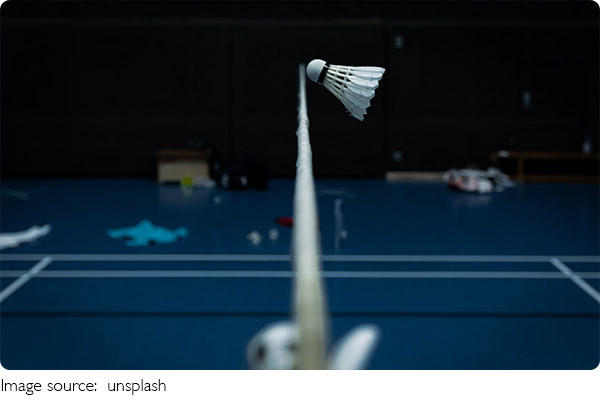
How to Actually Practice the Switch
One of the most practical ways to build this muscle memory doesn't even require a court. Sit on the couch watching something, racket in hand. During commercial breaks, stand up and practice quick drives — forehand, then backhand, then forehand again. It sounds silly. It works. The grip change needs to become unconscious, because in a real rally there's no time to think about it. Nothing is easy at the start. That's the honest truth. But the grip is the one skill that gets faster with the least amount of court time — which makes it the best thing to practice anywhere.