Red Fox Sighting Tips!

Finnegan Flynn
| 11-03-2026
 · Animal Team
The wild red fox is one of the most captivating and adaptable animals found across various landscapes.
Recognizing this cunning creature requires knowing specific physical traits, behavioral patterns, and habitats.
Distinctive Physical Characteristics
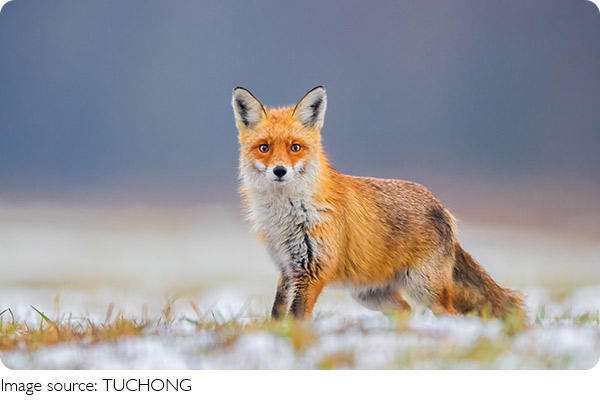
The red fox (Vulpes vulpes) typically measures about three feet in length, including a long, bushy tail known as a "brush." It weighs around 5 kilograms and stands roughly knee-height to an average. The coat is predominantly a vibrant orange-red shade covering the face, back, and sides, which gives the species its name. Key identification markers are the white underparts including throat and belly, and a fluffy tail tipped in white—a signature trait that helps differentiate red foxes from other similar species such as the gray fox.
The ears are large, upright, triangular in shape, and predominantly black-tipped. The snout is pointed and slender, contributing to the fox's sleek profile. Their feet are usually black, adding contrast to their striking fur pattern. Occasionally, individuals may exhibit patches of gray fur, which requires careful observation of tail tip color to confirm species identity.
Behavioral Indicators and Movement Patterns
Red foxes are known for their intelligence and adaptability. Tracking their presence can be aided by observing subtle signs such as their footprints and scat. Their paw prints often align in a straight line as foxes place each foot carefully in the print made by the opposite paw to move quietly and efficiently. Scat often contains remnants of small mammal bones and can be grayish in color. During colder seasons, tracks in snow are easier to spot.
Preferred Habitats and Geographic Range
Red foxes are extremely versatile, inhabiting a wide range of environments including woodlands, grasslands, mountains, and even suburban areas. Their resourcefulness enables survival near human dwellings and agricultural lands where food can be scavenged. In the United States, red foxes are widely distributed from Alaska to Florida, favoring open areas within forests, fields, and wetlands. Their adaptability allows them to thrive in both rural and suburban settings, often appearing at the edges of towns, farms, and parks.
Feeding Habits and Hunting Skills
An omnivorous diet supports the red fox’s survival across diverse environments. Their meals consist of small mammals, birds, insects, fruits, and occasionally carrion. Urban foxes are opportunistic scavengers known to rummage through bins. Hunting involves quick, agile movements, with the ability to pounce and leap to catch prey efficiently. This diet variety ensures they maintain energy through seasons where particular food sources may be scarce.
Lifespan and Survival
In the wild, red foxes typically live from 7 to 10 years, though in controlled environments such as captivity, lifespans may extend to 15 years. Survival in the wild depends on factors like availability of food, predation, disease, and habitat conditions.
Recognizing their tracks, scat, and understanding habitat preferences enhances chances of observation. Whether seen in remote wilderness or near human settlements, these resourceful mammals remain an enchanting part of the ecosystem, embodying the spirit of wild cunning and survival.